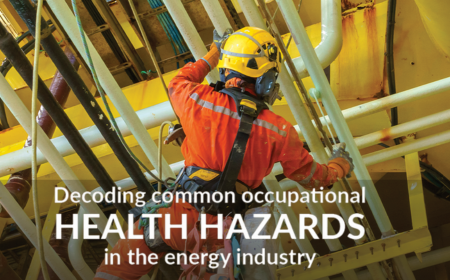
Working in the oil and gas industry is not easy. It takes skill, courage, and a lot of hard work. But it also comes with serious risks. Every day, workers in this field face dangers that most people never think about.
From drilling sites to refineries, hazards are everywhere. Some are visible — like heavy machinery or high-pressure pipes. Others are invisible — like toxic gases or chemical fumes you cannot see or smell.
This blog breaks down the most common occupational health hazards in the oil and gas industry. We will explain what they are, why they matter, and how companies can protect their workers.
The oil and gas industry is one of the most hazardous sectors in the world. According to the International Labour Organization, extractive industries account for a disproportionately high share of fatal workplace accidents globally.
Workers deal with extreme conditions — high temperatures, high pressures, flammable substances, and remote locations. Add long working hours and fatigue to the mix, and the risk only gets higher.
It is not just about physical injuries either. Many oil and gas workers develop long-term health conditions from repeated exposure to chemicals, loud noise, or extreme weather. These conditions can silently build up over years — and by the time symptoms appear, the damage is already done.
Chemical exposure is one of the biggest risks in the oil and gas industry. Workers are regularly exposed to harmful substances during drilling, refining, and transportation.
Some of the most dangerous chemicals include:
Chemical hazards are especially dangerous because they are not always obvious. Workers may not feel sick right away. But over months or years, the damage accumulates. That is why regular health monitoring and proper personal protective equipment (PPE) are essential.
Oil and gas are highly flammable. This is something everyone in the industry knows — but it does not make it any less dangerous.
Fires and explosions can happen without much warning. A small spark near a gas leak can trigger a massive explosion. Equipment failures, human error, or poor maintenance can all set off a chain reaction.
Workers can suffer severe burn injuries, respiratory damage from smoke inhalation, and blast injuries that affect the ears, lungs, and brain. In the worst cases, fires on offshore platforms or at refineries can be fatal for many workers at once.
Prevention requires strict protocols — gas detection systems, regular equipment checks, fire suppression systems, and thorough worker training. In the oil and gas industry, fire safety is never optional.
The risks in oil and gas extend well beyond just physical accidents. Let us look at some of the other hazards workers face every day.
Drilling rigs, compressors, turbines, and generators are all extremely loud. Workers in these environments are often exposed to noise levels well above the safe limit of 85 decibels (dB).
Prolonged exposure to loud noise causes permanent hearing damage. This does not happen overnight. It builds slowly over time. Many workers do not notice the loss until it is too late.
Hearing loss affects more than just the ability to hear. It can lead to social isolation, depression, and difficulty communicating on the job — which itself becomes a safety risk.
Solutions include proper hearing protection (earplugs or earmuffs), reduced exposure time, and regular hearing tests for workers in high-noise zones.
Physical labor is a core part of working in oil and gas. Workers lift heavy equipment, work in awkward positions, and spend long hours on their feet in challenging environments.
Over time, this leads to musculoskeletal disorders — injuries to muscles, tendons, ligaments, and joints. Common problems include back pain, shoulder injuries, knee damage, and repetitive strain injuries.
These injuries might sound minor compared to explosions or chemical exposure. But they are one of the leading causes of long-term disability and absence from work in the industry.
Good ergonomic practices — proper lifting techniques, mechanical aids, rotation of physically demanding tasks — can significantly reduce these risks.
This is an area that does not get talked about enough. Mental health is a real and serious occupational hazard in the oil and gas industry.
Workers often spend weeks or months away from their families — especially those on offshore rigs or remote onshore sites. Social isolation, long shifts, and high-pressure work environments take a serious toll on mental wellbeing.
Studies have found higher rates of depression, anxiety, and substance misuse among oil and gas workers compared to other industries. The ‘tough it out’ culture that still exists in some workplaces makes things worse — workers feel they cannot speak up about how they are feeling.
Companies need to invest in mental health support programs. This includes employee assistance programs (EAPs), regular check-ins, and creating a culture where seeking help is seen as strength — not weakness.
Addressing mental health is now considered a critical pillar of occupational health and safety in the oil and gas industry. It is no longer something that can be ignored.
Oil and gas operations happen in some of the harshest environments on Earth. From the deserts of the Middle East to arctic offshore platforms, workers face extreme temperatures every day.
Heat stress is a major concern in hot climates. It can cause heat exhaustion, heat stroke, and in severe cases, organ failure and death. Workers who are dehydrated or wearing heavy PPE are at even greater risk.
On the other end, cold environments bring risks of hypothermia and frostbite. Offshore workers in northern seas deal with freezing temperatures and strong winds as a part of their regular workday.
Managing heat and cold stress requires proper clothing, scheduled breaks, access to water and shade, and acclimatization programs for workers new to extreme environments.
Many people do not know that oil and gas operations can involve exposure to naturally occurring radioactive materials — known as NORM.
NORM is found in the scale and sludge that builds up inside pipes, vessels, and equipment used in production. When workers clean or handle this equipment, they can be exposed to low-level radiation.
Long-term exposure to radiation increases the risk of cancer. It is a slow, quiet hazard — but a real one. Workers handling NORM-contaminated equipment must follow strict safety protocols, including the use of radiation monitoring devices and specialized PPE.
Read Also- Why HSE Performance Matters When Selecting Oilfield Service Companies
The good news is that most of these hazards are preventable. With the right systems, training, and culture in place, companies can significantly reduce the risk to their workers.
Here are some of the most effective steps companies can take:
The oil and gas industry powers much of the world. But behind the energy it produces, there are real people doing dangerous jobs every single day.
Occupational health hazards in oil and gas are serious — from chemical exposure and explosion risks to noise damage, mental health struggles, and radiation. These are not small issues. They affect workers, their families, and entire communities.
The good news is that awareness is growing. More companies are taking occupational health seriously. Regulations are tightening. Technology is improving safety systems. But there is always more to be done.
Every worker in the oil and gas industry deserves to go home safe at the end of their shift. That should not be a luxury — it should be the standard.
Also Read: Outsourcing Strategies in the Upstream Oil and Gas Industry
By Get global | September 9, 2026
By Get global | September 9, 2026
An offshore rig losing production can bleed staggering sums for every hour it sits idle. On the other end of the same industry, a well-run inspection or maintenance contract just keeps collecting steady, contract-locked revenue for a decade, without ever touching a barrel of crude. Same industry. Same oil underneath […]

By Get global | September 9, 2026
By Get global | September 9, 2026

By Get global | September 9, 2026
Oil and gas companies need to improve production while reducing downtime and keeping older assets running safely. Automation software helps by giving teams better control over equipment, alarms, operating data, and daily production. Different operations require different tools. Refineries may need a DCS for plant control, while pipeline operators often […]